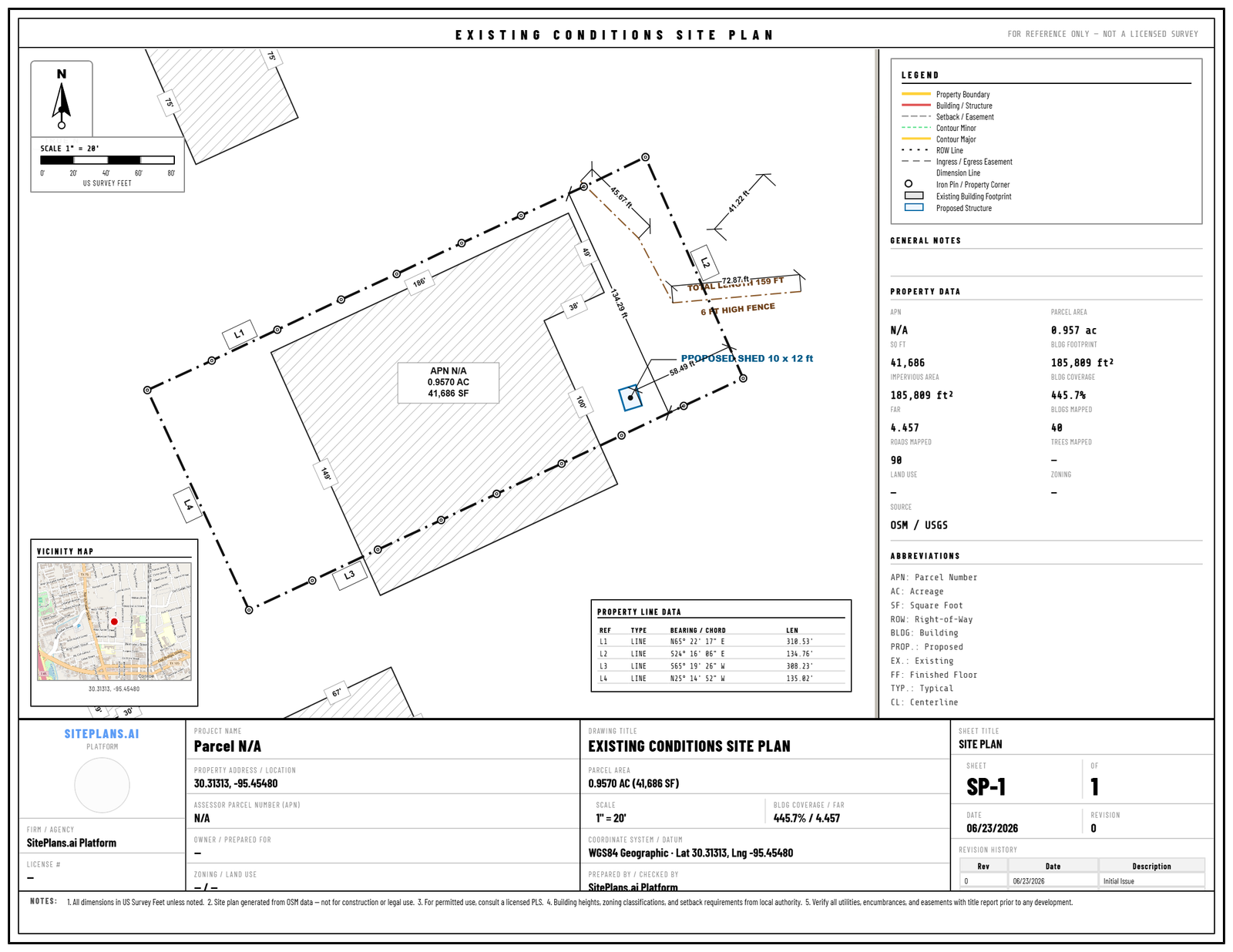
Why Sheds Trigger Real Permit Scrutiny
A shed feels small. To a reviewer, it's still a structure with a footprint, a roofline, and a set of setback rules that don't care how big or small the thing is. Cross a size threshold — often 120 or 150 square feet — and you're no longer in "exempt" territory. Some counties require a site plan for any accessory structure at all, regardless of size.
The site plan is what tells the reviewer where the shed sits relative to your rear line, your side lines, and anything else already on the lot. Skip it, guess at it, or hand in a hand sketch, and the file usually comes back before anyone even looks at the shed design itself.
What the Drawing Needs to Show
| Element | Why It Matters |
|---|---|
| Property lines with dimensions | Confirms the shed clears the boundary |
| Existing structures | Reviewer needs the full lot picture, not just the shed |
| Shed footprint and dimensions | Size often determines whether a permit is even needed |
| Setbacks to lines and structures | Most rejections come from an unclear setback |
| Easements | Building over one can trigger a removal order later |
| Lot coverage, if tracked locally | Sheds count toward impervious surface limits in many cities |
The Part That Actually Delays Permits
It's rarely the shed design. It's the setback number that nobody double-checked, or the property line that got guessed at because there wasn't a recent survey handy. A shed placed three feet off a line that requires five doesn't get flagged until the plan is already in review — and by then you've lost the week it took to get that first submission looked at.
Tree protection is the other quiet one. Several counties require a tree survey before an accessory structure permit gets approved, especially for larger protected trees near the build site. It's easy to miss if you're only thinking about the shed itself.
How SitePlans.ai Builds the Drawing
- Enter your property address to pull in available site context.
- Confirm your property lines against what's shown for your parcel.
- Place the shed footprint and label its dimensions.
- Add setbacks to the nearest lines and existing structures.
- Note any easements the shed comes close to.
- Export a clean, permit-style PDF.
You're not drawing on a blank canvas or fighting a generic app to make it look like a real site plan — it's built around the actual structure a reviewer expects, from title block down to setback labels.
Coverage note: parcel accuracy differs by county. If your lines don't look right, check your county tax assessor's site before finalizing, or move to a human-reviewed plan through SitePlans.us.
When You Need More Than a Preliminary Plan
If your shed pushes past your city's largest accessory-structure threshold, sits in a flood zone, or your jurisdiction requires an engineer's stamp at a certain size, a self-prepared site plan won't clear that bar. That's when a licensed professional — or the done-for-you option through SitePlans.us — is the right call instead of doing it yourself.
Who Uses This
- Homeowners adding a storage shed, workshop, or garden shed
- Shed installers and contractors pulling multiple permits across job sites
- Landscapers including a shed in a broader yard project
- Property managers adding storage to rental properties
FAQ Items
Q: Do I need a site plan for a shed permit?
A: In most cities, yes, particularly once the shed crosses a size threshold. Some small sheds are permit-exempt, but zoning setbacks still apply regardless of whether a permit is required.
Q: What size shed usually needs a site plan?
A: Thresholds vary by city, but 120–150 square feet is a common trigger point. Always check your specific city's accessory structure rules before assuming.
Q: Can I build my own site plan for a shed permit?
A: Yes, where your city accepts homeowner or contractor-prepared drawings. Always confirm that format is accepted locally before submitting.
Q: What if my shed is near a property line I'm unsure about?
A: Cross-check with your county GIS or tax assessor records. If there's real uncertainty, a licensed survey removes the guesswork entirely.
Q: Does a shed count toward my lot coverage limit?
A: In many jurisdictions, yes. If your city tracks impervious surface, check your existing coverage before adding a shed footprint on top of it.
Q: When should I use SitePlans.us instead?
A: When your shed needs an engineer's stamp, sits in a floodplain, or your permit already got rejected once and you want a professional to take it from here.